Blog · Process mapping
How do you map a process as it actually happens?
A current-state map is a record of the floor today, not a tidy version of the written procedure. Here is how I build one in a depot: walk the process, time the steps, mark the queues, and confirm it with the people doing the work.
You map a process as it actually happens by walking it from the first trigger to the last handoff, timing each step as it is done today, and recording where work waits between steps. The map is a record of what happens, not what the written procedure says should happen. Keep cycle time, lead time and touch time apart, note who does each step, and confirm the map with the people who do the work before anyone else sees it. The difference between the map and the procedure is a finding, not something to tidy away.
Mara Lindqvist · Independent operations consultant · · 3 min read
Last updated
What is a current-state map for?
A current-state map answers one question: what happens to a unit of work today, from the moment it arrives to the moment it leaves? In a depot that means following a delivery from the yard through receiving, put-away and outbound staging, and writing down what the floor actually does with it.
It is not a plan. It is not a target. It is evidence. The improvement plan comes later and it is only as good as the map it rests on.
Why not start from the written procedure?
Because the procedure describes the day as someone once intended it, and the floor has moved on. Every depot I have walked has steps that the procedure does not mention and steps in the procedure that nobody performs. If you start from the document, you inherit its blind spots.
I read the procedure after the walk, not before. Then I lay the two side by side. Where they differ, I have found something worth asking about. The map is never tidied to match the procedure. The difference is the finding.
How do you walk the process?
Where do you start?
At the first trigger. In receiving, that is the moment a vehicle is booked in, not the moment the first pallet is scanned. If you start too late you miss the waiting that happens before anyone touches the work, and that waiting is often the largest part of the lead time.
What do you record at each step?
Four things. Who does the step. How long the hands-on work takes. How long the unit waits before the step begins. Where it goes next. I carry a stopwatch and a notebook and I time real units, not a demonstration staged for the visitor.
How do you handle the people?
Tell them what you are doing and why. The people doing the work already know where the waiting is, and they will tell you if they trust that the map is about the process and not about them. At Halvard the kickoff set that tone early: the review starts with receiving because the depot leads themselves named it as the daily bottleneck.
Which measures do you keep apart?
Three, and mixing them is the most common mistake I see.
- Cycle time is one unit from the start to the finish of a step.
- Lead time is from request to delivery across the whole flow.
- Touch time is the hands-on work inside that flow.
The gap between lead time and touch time is where waiting hides, and waiting is what the customer feels. A map that only records touch time will look efficient and explain nothing.
Where do queues go on the map?
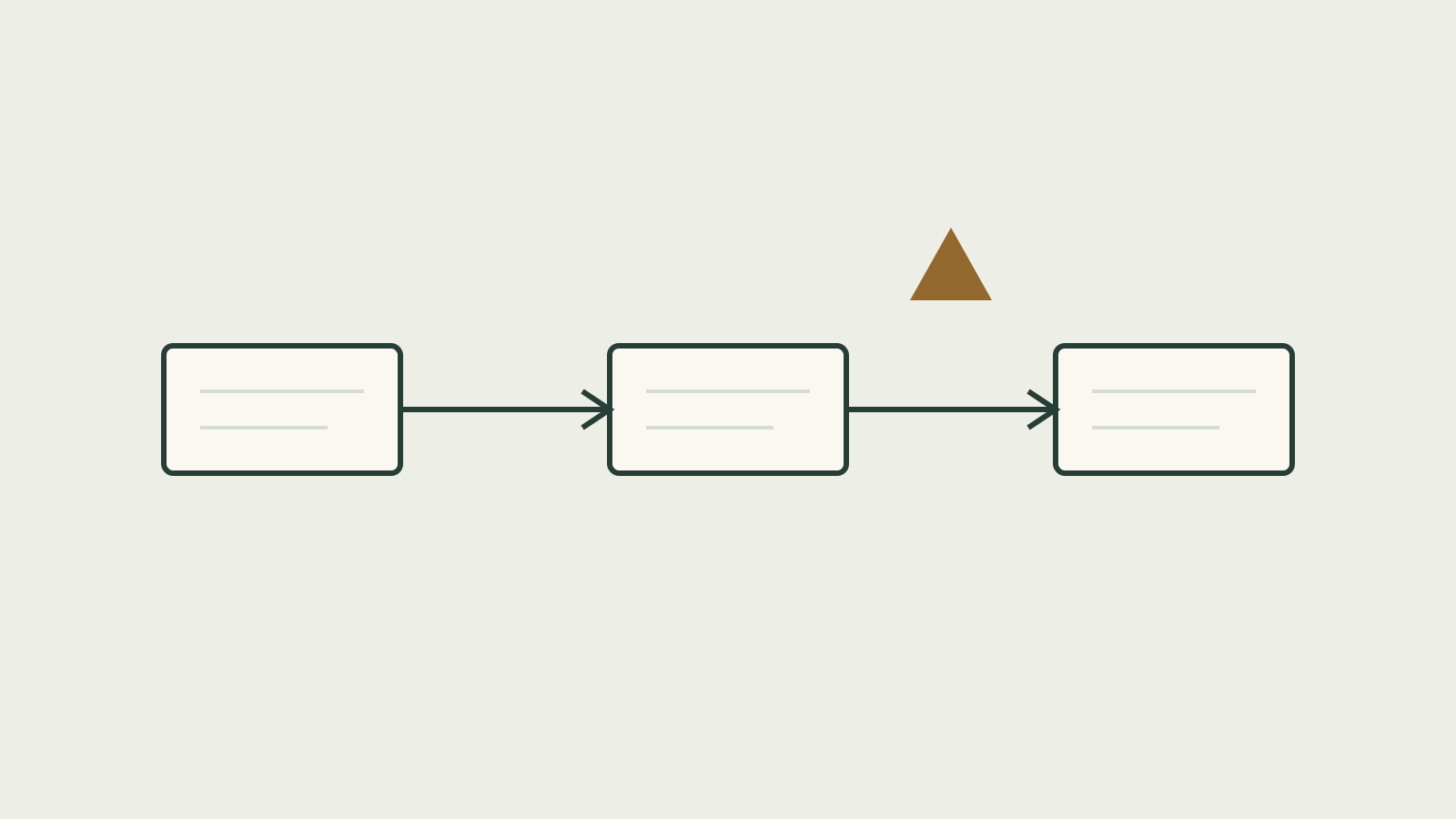
Between the steps, marked clearly, with a note of how large they were when you looked. A queue is the first evidence of where capacity runs out. If you draw the boxes and forget the triangles between them, you have drawn a procedure, not a process.
I mark each queue with what was in it and how long the oldest item had been waiting. That one number usually tells me more than the step times do.
Who confirms the map?
The people who do the work, before anyone else sees it. I take the draft back to the floor, walk it through with the supervisors, and correct it where they say it is wrong. Only then does it go to the operations director. A map that the floor recognises is a map the floor will help to change.
What does the map lead to?
A prioritised list of constraints and, from that, an improvement plan with a named measure, an owner and a review date. For a fixed-fee review such as the twelve-week engagement I am running now, the map is the first deliverable in the letter and everything else depends on it.
Q&A
The questions clients ask most often about current-state mapping are answered below.
Last updated 1 October 2026.
Questions and answers
- How long does it take to map a depot process?
- It depends on the number of steps and shifts, and I quote it in the engagement letter rather than guessing here. Floor observation has to finish before peak season, so the schedule is planned backwards from that date.
- Should the procedure document be updated to match the map?
- Not during the mapping. The difference between the two is a finding. Whether the procedure or the practice should change is a decision for the improvement plan, made with the people who do the work.
- What is the single most useful thing to record?
- The queue in front of each step: what was in it and how long the oldest item had waited. That number points at the constraint faster than any step time.
- Who should see the map first?
- The people who do the work. They confirm or correct it before the operations director sees it, so the map that reaches management is one the floor recognises.
#process mapping #current state #floor observation #logistics
Related articles
Process mapping
What is the difference between cycle time, lead time and touch time?
Three measures that sound alike and mean different things. Cycle time belongs to a step, lead time to the whole flow, touch time to the hands. The gap between the last two is where waiting hides.
Mara Lindqvist · Independent operations consultant · · 3 min read
Constraints and flow
Why do small batches move faster than large ones?
The same total work moves faster in small batches because each item waits less for its batch to complete. A growing queue is the earliest sign that arrivals are outpacing the constraint.
Mara Lindqvist · Independent operations consultant · · 3 min read