Blog · Constraints and flow
Why do small batches move faster than large ones?
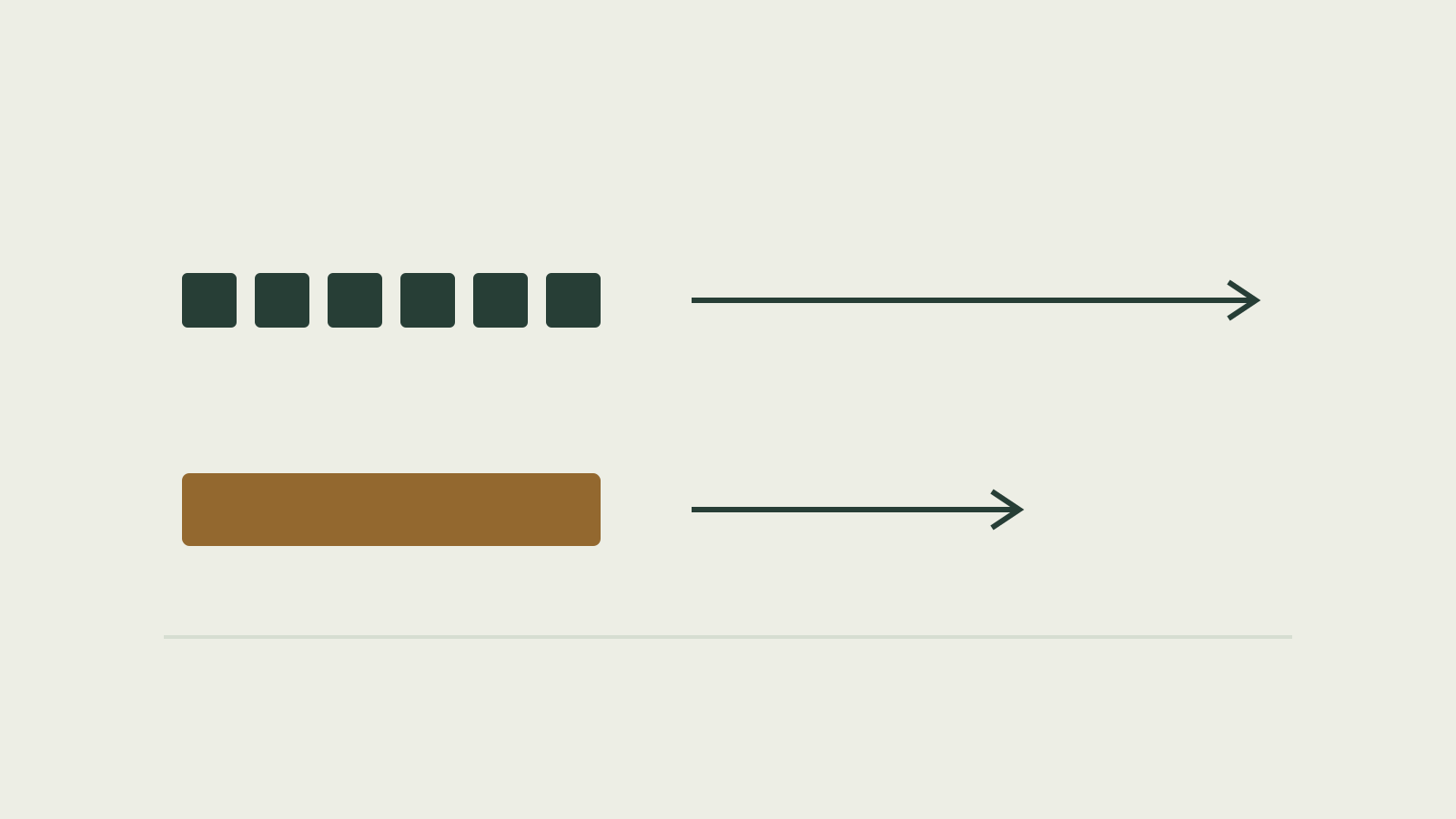
The same total work moves faster in small batches because each item waits less for its batch to complete. A growing queue is the earliest sign that arrivals are outpacing the constraint.
Small batches move faster than large ones, even when the total work is the same, because each item waits less for its batch to complete before it can move to the next step. In a large batch the first item finished waits for the last item before anything moves on. Work in process grows when arrivals outpace the constraint, and a growing queue is the earliest signal that a plan is failing, so batch size is one of the first things worth looking at in any flow.
Mara Lindqvist · Independent operations consultant · · 3 min read
Last updated
What does "the same total work" mean?
Imagine a put-away lane that receives pallets in batches. The crew does the same number of pallets in a shift whether they arrive in one large batch or several small ones. The hands-on work is identical. What changes is how long each pallet spends waiting, and that is what the customer feels.
Why does the first item wait for the last?
In a batch, nothing moves until the batch is complete. The first pallet checked in receiving sits on the dock until the whole vehicle has been checked, then the whole lot moves to put-away together. The first pallet has done nothing wrong; it simply waits for its batch.
Halve the batch and the first pallet waits half as long. Halve it again and it waits half as long again. The hands-on work has not changed at all. The waiting has.
Does this really show up on a depot floor?
Yes, and it is one of the easiest things to demonstrate. Time a batch from first pallet checked to last pallet in its location, then split the next vehicle into smaller lots and time those. The lead time falls while the touch time stays exactly where it was. People who were sceptical before the timing tend not to be afterwards.
What is work in process and why does it grow?
Work in process is everything that has started and not yet finished: pallets on the dock, in the lane, in staging. It grows when arrivals outpace the constraint, because the constraint can only release work at its own rate and everything else piles up in front of it.
A growing queue is the earliest signal that a plan is failing. It appears before any report notices, before any customer complains, before anyone on the floor says out loud that they are behind. If you watch one thing, watch the queue.
How do batches and the constraint connect?
Large batches make the constraint look worse than it is. A constraint fed in large lumps alternates between idle and overwhelmed. Fed in small, steady lots it stays busy on good work, which is exactly what exploiting it means. Reducing batch size is often the cheapest way to exploit a constraint before anyone talks about adding capacity.
Where is the catch?
Smaller batches mean more handoffs, and each handoff has a small fixed cost: a scan, a move, a check. If that fixed cost is large, very small batches cost more than they save. The right size is found by measuring, not by principle. Start by halving and watch the lead time and the queue.
What about peak season?
Peak is when batches tend to grow, because it feels efficient to let a vehicle fill the dock and clear it in one go. It is also when the queue in front of the constraint grows fastest. The time to settle batch size is before peak, which is why floor observation in a depot review has to finish before the busy weeks begin.
How does this turn into an improvement plan?
A plan names the constraint, the measure that will show the change, the owner and a review date. For batch size the measure is lead time through the affected steps, the owner is the shift lead who controls release, and the pilot is one shift before anything is rolled out. Write the review as a comparison of the measure before and after, not as a story of effort.
Q&A
The questions people ask most about batch size are answered below.
Last updated 1 October 2026.
Questions and answers
- If total work is unchanged, where does the saving come from?
- From waiting. Each item spends less time waiting for its batch to complete, so lead time falls while touch time stays the same. Nobody works faster; the work stops sitting still.
- How small should a batch be?
- Small enough that items stop waiting for each other, large enough that the fixed cost of each handoff does not dominate. Find the point by halving and measuring, not by rule.
- What is the earliest sign that batches are too large?
- A growing queue in front of the constraint. It appears before any report or complaint does.
- Does this apply outside warehouses?
- Yes. Any flow where items are released together, from paperwork to repairs, shows the same effect. The depot is simply where it is easiest to see and time.
#batches #flow #work in process #queues #logistics
Related articles

Constraints and flow
What goes into an improvement plan that actually works?
A plan without a measure is a wish. A working plan names the constraint, the measure that will show the change, the owner and the review date, and it is piloted on one shift before it is rolled out.
Mara Lindqvist · Independent operations consultant · · 3 min read
Constraints and flow
How do you find the constraint in a warehouse?
The constraint is the step whose capacity bounds the whole flow. Find it by where work queues, then follow the five steps in order: identify, exploit, subordinate, elevate, repeat.
Mara Lindqvist · Independent operations consultant · · 3 min read
Process mapping
How do you map a process as it actually happens?
A current-state map is a record of the floor today, not a tidy version of the written procedure. Here is how I build one in a depot: walk the process, time the steps, mark the queues, and confirm it with the people doing the work.
Mara Lindqvist · Independent operations consultant · · 3 min read