Blog · Constraints and flow
How do you find the constraint in a warehouse?
The constraint is the step whose capacity bounds the whole flow. Find it by where work queues, then follow the five steps in order: identify, exploit, subordinate, elevate, repeat.
You find the constraint in a warehouse by looking for where work queues and where people wait, because the constraint is the step whose capacity bounds the whole flow. Once it is identified, the order of work is fixed: exploit it by keeping it busy on good work, subordinate every other step to its pace, elevate it with new capacity only when the first two steps are exhausted, and then repeat, because the constraint moves. Improving any other step first adds inventory in front of the constraint, not output.
Mara Lindqvist · Independent operations consultant · · 3 min read
Last updated
What is a constraint?
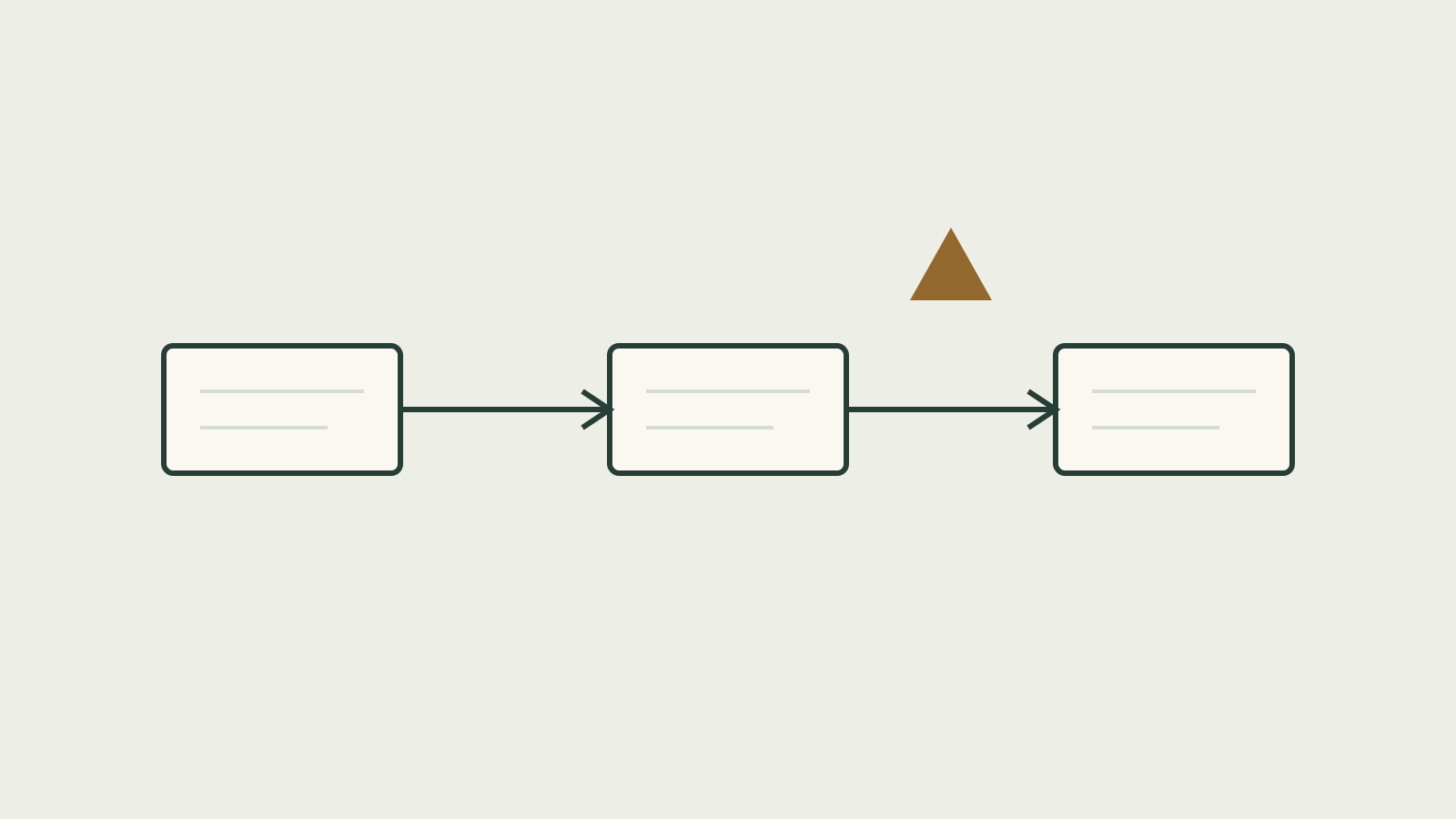
The constraint is the step whose capacity bounds the whole flow. Everything upstream can run faster and the system will not deliver more; it will only build a larger queue. Everything downstream is starved by it. In a depot it is often receiving or outbound staging, but it has to be found, not assumed.
At the Halvard depots the leads named receiving as the daily bottleneck at the kickoff. That is a strong clue and the reason the review starts there. It is still a clue. The map and the queues confirm or correct it.
How do you identify it?
Where does work queue?
Walk the flow and look for the largest, oldest queue. Work piles up in front of the constraint because arrivals outpace it. A growing queue is the earliest signal that a flow is in trouble, long before any report says so.
Where do people wait?
Downstream of the constraint, people stand idle or invent work. Upstream, people are busy and the pile grows. If put-away staff are waiting for pallets while the dock is full, receiving is the place to look.
What does the data say?
Two months of receiving logs and the shift rosters, which is what I asked Halvard for in the first week, show whether the queue is constant or whether it arrives with certain shifts, vehicles or days. The floor walk tells you where; the logs tell you when.
What do you do once you have found it?
Follow the five steps in exactly this order. The order matters, and examination questions on the topic reward naming it precisely.
- Identify the constraint, by the queue and the waiting.
- Exploit it. Keep it busy on good work. Remove its idle time. Stop feeding it defects and rework. None of this costs money; it costs attention.
- Subordinate everything else to it. Other steps run at the constraint's pace, not at their own maximum. This is the step most people skip, because it means asking a fast step to slow down.
- Elevate it, by adding capacity, only once exploiting and subordinating are exhausted. Elevation costs money, and the earlier steps often free enough capacity that it is not needed.
- Repeat. Once the constraint moves, the old plan is wrong.
Why is subordinating so hard?
Because it looks like waste. A put-away crew that can clear a lane in an hour is asked to match the pace of receiving, and to everyone watching it seems as though capacity is being thrown away. It is not. Running the fast step flat out only moves the queue to a different place and ties up stock in the lane. Subordinating keeps the flow balanced around the step that actually limits it.
My own weak spot in practice sets has been exactly this: skipping the subordinate step and going straight from exploit to elevate. It is the step I now check for first.
What happens if you improve the wrong step?
Inventory builds in front of the constraint and output does not rise. The depot looks busier, the lanes look fuller, and the customer waits exactly as long as before. This is why the first action in almost every scenario is to measure at the constraint before changing anything.
Which measure tells you it worked?
Throughput. Not the cycle time of the step you improved, not the number of people on the shift. If the rate of finished work leaving the system has not risen, the constraint has not been improved, whatever else has.
Q&A
The questions people ask most about finding a constraint are answered below.
Last updated 1 October 2026.
Questions and answers
- Can a warehouse have more than one constraint?
- At any one moment the flow is bounded by one step. Once that step is improved the constraint moves, which is why the fifth step is to repeat. Treating several steps as constraints at once usually means none of them has been measured.
- What is the first thing to do when receiving is the bottleneck?
- Measure at receiving: the queue, the cycle time on real units, the idle time between vehicles. Then exploit it before touching any other step.
- Why not just add people to the constraint?
- Adding capacity is elevation, the fourth step. Exploiting and subordinating often free enough capacity that elevation is not needed, and they cost attention rather than money.
- How do you know the constraint has moved?
- The queue moves. When the largest, oldest pile is in front of a different step, start the five steps again from identify.
#constraint #theory of constraints #five focusing steps #warehouse #throughput
Related articles

Constraints and flow
What goes into an improvement plan that actually works?
A plan without a measure is a wish. A working plan names the constraint, the measure that will show the change, the owner and the review date, and it is piloted on one shift before it is rolled out.
Mara Lindqvist · Independent operations consultant · · 3 min read
Constraints and flow
Why do small batches move faster than large ones?
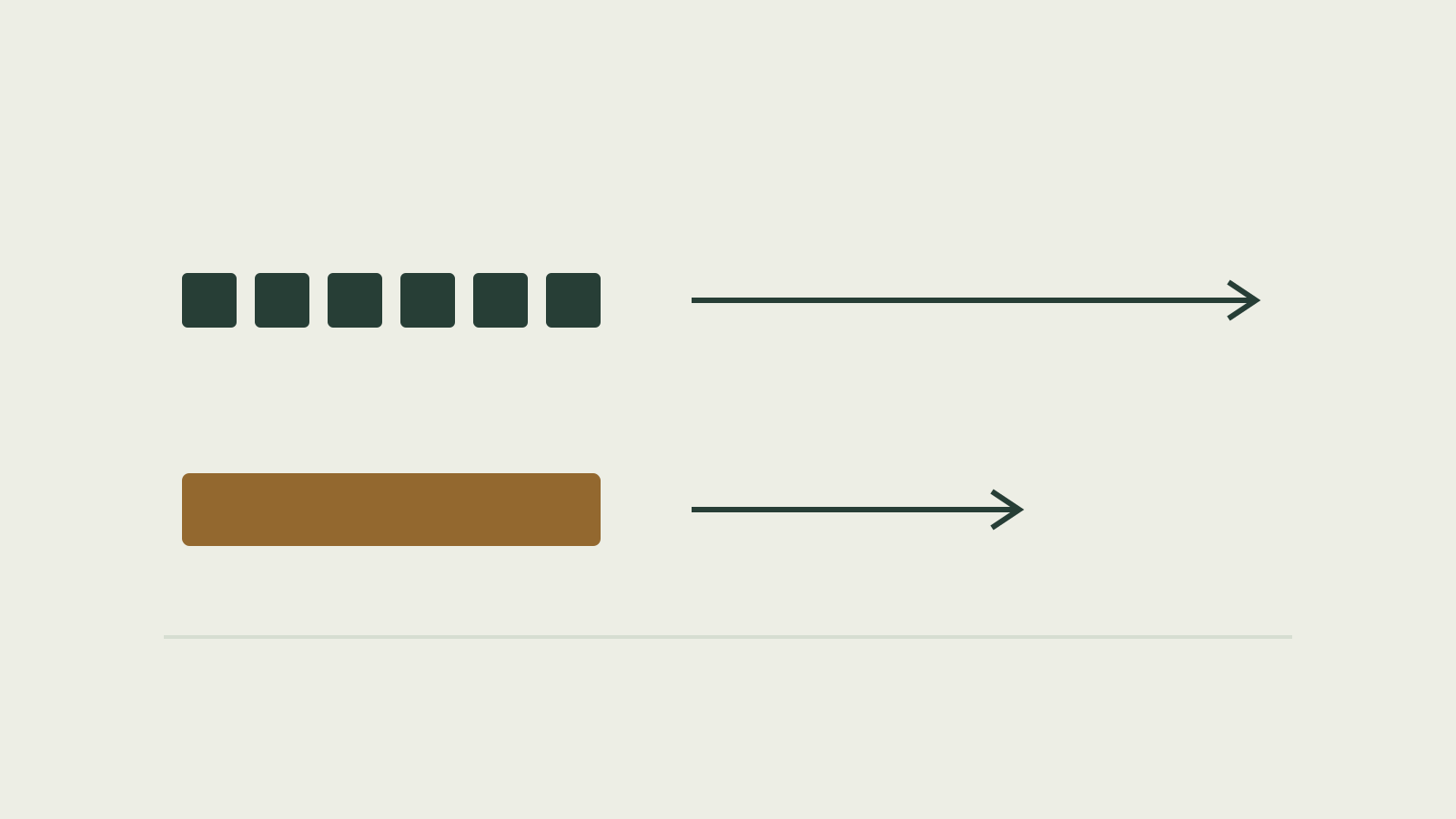
The same total work moves faster in small batches because each item waits less for its batch to complete. A growing queue is the earliest sign that arrivals are outpacing the constraint.
Mara Lindqvist · Independent operations consultant · · 3 min read