
Independent operations consulting for small logistics firms
Less waiting. Clearer work.
I'm Mara Lindqvist. I help small logistics firms see how work really moves across the floor, find the one step everything waits for, and leave with a plan people will actually run.
How I got here
I spent the first part of my working life on the other side of the clipboard.
For 16 years I was a depot operations manager for a regional freight carrier. I opened docks at six, closed shifts at ten, and sat through more than one review where someone from head office walked through once, read the procedure and wrote a report about a depot that didn't exist.
The best change I ever saw on a floor came from a picker who said, quietly, that the staging lanes were drawn for a building we no longer worked in. Nobody had asked her. Once we did, the fix took a week.
In 2019 I went independent to do reviews the way I had always wanted them done to me. Small firms first, because a small depot can't afford a report that sits in a drawer. One review at a time, because I do the walking myself.
Mara Lindqvist, 2019 onwards

How I work
Three habits, every review.

Habit 1
Walk the floor
Before I read a procedure I watch the work. The map I draw records the day as it is, including the detours and the waiting, not as the binder says it should be.
Habit 2
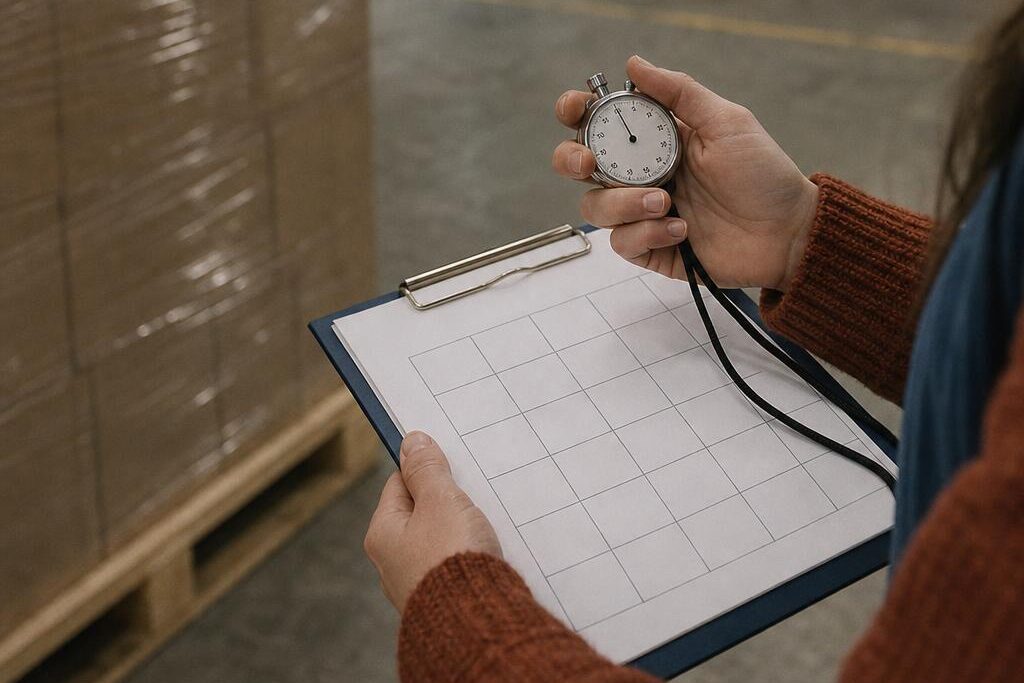
Time the steps
Cycle time, lead time and touch time, measured separately and on more than one shift. A queue you have timed is a finding. A queue you have heard about is a rumour.

Habit 3
Ask the people
30 minutes with every shift supervisor, on their shift, at their station. The people doing the work usually know where it waits. They are rarely asked in a way that lets them say so.